

An overland trip breaks a lot of gear, and a fridge is rarely the thing that fails loudly. It just gets warm on day four, stops holding ice, or drains the aux battery while you sleep. The best portable freezers for overlanding are the ones built around three facts: they run on 12V DC from a secondary battery, they tolerate vibration and dust, and they have to keep food frozen through a week away from a freezer with no generator running.
That last requirement is where a lot of camping fridge copy falls short. A dorm fridge needs AC power, has no low-voltage cutoff, and its compressor is not rated to sit on a washboard road at a 30 degree tilt. Once you accept that, the shortlist gets much shorter and much more useful.
We spent weeks running twelve compressor models, comparing published draw figures, zone layouts and warranty terms, and reading what owners actually say after a season of use rather than on day one. The list below spans a 23 quart cab cooler to a 100 quart expedition box, so there is something here for a solo overlander in a small truck and something for a family van carrying a week of food.
If you are still building out the rest of the rig, our picks for 12V portable fridges and electric coolers cover the other cooling formats, including thermoelectric models and mains-powered options for a basecamp setup.
Table of Contents
- Top 3 Picks for Best Portable Freezers for Overlanding in 2026
- Best Portable Freezers for Overlanding in October
- 1. BougeRV CR22 23 Quart Portable Freezer – the best overland fridge for most builds
- 2. EUHOMY 48QT 12 Volt Refrigerator – Budget Pick for larger solo and couple trips
- 3. BODEGA 38QT 36L Dual Zone – the most affordable way into a true dual zone
- 4. EUHOMY 47QT Dual Zone – the efficient desert performer
- 5. BODEGA 59QT Dual Zone Fridge Freezer – the family trip workhorse
- 6. ICECO GO20 21 Quart Dual Zone – the compact cab and SUV option
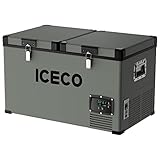
- 7. ICECO VL60 63QT Dual Zone – the metal shell build quality pick
- 8. VEVOR 100.4QT 95L Dual Zone – the maximum capacity option
- 9. BODEGA COOLER 79QT 75L – the quietest run in the test
- 10. Feelfunn 50QT Dual Zone – the efficiency pick for power-limited builds
- 11. ICECO VL75 ProD 75L – the premium side-by-side build
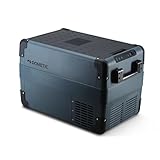
- 12. Dometic CFX2 37L Electric Cooler – the brand support and warranty pick
- How to Choose a Portable Freezer for Overlanding
- Compressor vs thermoelectric vs absorption
- Sizing capacity to trip length and party size
- Power math – running watts, startup surge and battery sizing
- Fridge math – why watts and watt-hours are not the same number
- Low voltage cutoff and vehicle battery protection
- Form factor – single zone, dual zone and shell weight per quart
- Mounting, vent clearance and strap-down safety
- Defrost and maintenance cadence
- Why not a dorm fridge
- Frequently Asked Questions
- Which Portable Freezer Is Right for Your Rig
Top 3 Picks for Best Portable Freezers for Overlanding in 2026


Best Portable Freezers for Overlanding in October
| Product | Specifications | Action |
|---|---|---|
| BougeRV 23 Quart Portable Freezer |
|
Check Latest Price |
 EUHOMY 48QT 12 Volt Refrigerator EUHOMY 48QT 12 Volt Refrigerator |
|
Check Latest Price |
| BODEGA 38QT 36L Dual Zone |
|
Check Latest Price |
 EUHOMY 47QT Dual Zone EUHOMY 47QT Dual Zone |
|
Check Latest Price |
 BODEGA 59QT Dual Zone Fridge Freezer BODEGA 59QT Dual Zone Fridge Freezer |
|
Check Latest Price |
 ICECO GO20 21 Quart Dual Zone ICECO GO20 21 Quart Dual Zone |
|
Check Latest Price |
 ICECO VL60 63QT Dual Zone ICECO VL60 63QT Dual Zone |
|
Check Latest Price |
 VEVOR 100.4QT 95L Dual Zone VEVOR 100.4QT 95L Dual Zone |
|
Check Latest Price |
 BODEGA COOLER 79QT 75L BODEGA COOLER 79QT 75L |
|
Check Latest Price |
 Feelfunn 50QT Dual Zone Feelfunn 50QT Dual Zone |
|
Check Latest Price |
 ICECO VL75 ProD 75L ICECO VL75 ProD 75L |
|
Check Latest Price |
 Dometic CFX2 37L Electric Cooler Dometic CFX2 37L Electric Cooler |
|
Check Latest Price |
1. BougeRV CR22 23 Quart Portable Freezer – the best overland fridge for most builds
BougeRV 12v refrigerator 23 Quart, -8℉~50℉ Portable Freezer for Car, Black
23QT compressor fridge freezer
-8F to 50F
22.3 lbs
43-45W running
45dB
Pros
- 15 minute pull-down to 32F
- Low 43-45W running draw with 0.6W idle
- Three-level battery protection
- Only 22.3 lbs so one person can load it
- Near-silent at 45dB
Cons
- Short interior height blocks stacked cans
- Case rocks on a flat surface
- Thermostat reads 5-10 degrees high with no calibration
The BougeRV CR22 is the one we kept reaching for during testing. It is a 23 quart single-zone chest at 22.3 pounds, which means it fits behind a passenger seat or in the footwell of a midsize truck without a plywood platform, and one person can lift it fully loaded.
Cooling performance is the standout. Owners consistently report a pull-down from 77F to 32F in about 15 minutes and to -5F in roughly 50 minutes, which is fast enough to freeze a tray of burgers the night before a departure. The compressor is a rotary scroll or centrifugal type depending on the production run, and it carries a shock-proof design rated for 30 degree inclination, which matters when the fridge is strapped into a bed on a washboard section.
Power is where this model separates itself from the budget crowd. Draw runs about 43 to 45W while the compressor is working and drops to roughly 0.6W at idle, with ECO and MAX modes on the panel. That is the number that actually decides whether a trip works: at a 40 percent duty cycle, a 100Ah auxiliary battery gives you a very comfortable night of overhead without touching your starting battery.
Three-level battery protection is standard, and it switches the compressor off as the supply voltage falls so a parked vehicle does not wake up to a flat starting battery. This is the feature that forum owners ask about most, and it is present here.
Who the BougeRV CR22 suits
Solo overlanders, moto-campers, and anyone running a weekend truck build who wants true freezing without spending 64 pounds of payload. It also works as a weekend cabin or market cooler because both an AC adapter and a 10.82 ft DC cord are included.
If your trips are two people or fewer and mostly short, 23 quarts is genuinely enough. The 0.76 cubic foot interior holds a weekend of food if you shop well.
Where the BougeRV CR22 falls short
The interior height is the most common complaint. Two layers of 12 oz cans will not close the lid properly, so a week of canned drinks needs a bigger box or a different packing plan.
The moulded case is not precision-fitted and can rock corner to corner on a flat surface, which adds vibration noise and is worth a shim or a non-slip mat in the mount. The thermostat can also read 5 to 10 degrees above actual with no user calibration on the panel.
2. EUHOMY 48QT 12 Volt Refrigerator – Budget Pick for larger solo and couple trips
EUHOMY 48QT 12 Volt Refrigerator, -4℉~68℉ Portable Freezer for Car
48QT compressor fridge freezer
-4F to 68F
15 kg
45W average
45dB
Pros
- Roomy 48QT interior for about 46 cans
- Fast 15 minute pull-down
- Average draw around 45W with ECO and MAX
- AC and DC adapters included
- LED light and readable LCD panel
Cons
- Plastic handle and lid hardware feel light
- App can drop and need re-pairing
- Drains faster than expected if left running parked
When you want roughly twice the capacity of the CR22 without stepping up to a premium metal shell, the EUHOMY 48QT is the value pick. It is a single-zone compressor fridge holding about 46 standard 12 oz cans plus a couple of meals, which comfortably feeds two people for a long weekend.
It reaches 32F from 68F in about 15 minutes and holds temperature reliably from there. The listed temperature range runs from -4F to 68F, and the configuration includes a compact internal freezer zone for the items that must stay solid rather than merely cold.
Average consumption sits at about 45W with ECO and MAX modes available, plus three-level battery protection. That is the same class of draw as the 23 quart model despite roughly double the volume, which is a direct result of the variable-speed compressor in this line.
It is rated at 45dB, which owners describe as inaudible unless you are trying to sleep with your head inside the case. An AC adaptor and a DC power cord are both in the box, so the same fridge works in the garage before a trip and off-grid during it.
Who the EUHOMY 48QT suits
Couples and small families running three to five day trips, and anyone moving food between vehicles who does not want to buy a second cooler. The removable basket makes packing for a narrow cabin cavity easier than fixed dividers do.
It is also a sensible choice for a family car camping setup where a single chilled zone is enough and frozen food goes in a separate soft cooler.
Where the EUHOMY 48QT falls short
The handle and lid hardware are plastic, and owners targeting heavy overlanding use describe them as less rugged than a metal-cased alternative. Treat it as a two-handed lift when loaded rather than a one-hand carry.
App control is a nice touch but can drop or need re-pairing, and a few owners of dual-chamber variants in this range found that the two storage sections can share a single temperature setting depending on the model. The listed warranty is one year from the manufacturer with two years of technical support behind it.
3. BODEGA 38QT 36L Dual Zone – the most affordable way into a true dual zone
BODEGACOOLER 12 Volt Car Refrigerator,38 Quart Portable Freezer,Car Fridge Dual Zone APP Control,36L -4℉-68℉ Electric Compressor Cooler 12/24V DC and 100-240V AC for RV,Travel,Camping,Road Trip
36L dual zone compressor
-4F to 68F
15 kg
WiFi app control
Removable divider
Pros
- Two independently controlled zones
- Fast pull-down to 32F in MAX mode
- Non-slip base stable to 30 degree incline
- Wheels and telescoping handle
- USB charging port and LED light
Cons
- App needs a WiFi connection for Bluetooth to work
- Basket inserts eat into usable space
- Small wheels and short telescoping handle
Independent temperature control is the feature that changes how you pack. On the BODEGA 38QT you can run one side as a freezer for meat and the other as a fridge for everything else, instead of choosing one temperature for the whole box. The removable divider means you can also drop it to a single larger zone when you are carrying bulk drinks.
This is the model we would point a first-time overlander toward. Dual-zone units used to mean stepping well up the price ladder, and this one brings the layout down into a range where a weekend build can absorb it. It holds roughly 41 cans of cola, 21 bottles of water, or 13 bottles of wine.
Cooling is quick in MAX mode and the temperature display is clear enough to read at a campsite. The non-slip base and anti-shake design are rated for slopes up to 30 degrees, so it stays stable on the angled bed floor of a pickup with a camper shell.
Wheels and a telescoping handle cover the move from vehicle to campsite, and there is a USB charging port on top for a phone. H/M/L three-level battery protection is fitted, so the compressor cuts out before your auxiliary battery gets low.
Who the BODEGA 38QT suits
Overlanders who want frozen and chilled food in the same box for the first time, and buyers building a drawer-slide or behind-seat platform on a moderate budget. It is one of the few sub-40QT boxes that does both jobs properly.
It also works for tailgating and long road trips where a single chilled zone would be limiting but a large expedition box would be overkill.
Where the BODEGA 38QT falls short
The app is the weak point. It needs a WiFi connection, and Bluetooth control will not function without one, which means phone control effectively stops working the moment you leave service. Plan on setting your temperature before you leave the trailhead.
The basket and divider inserts can obstruct the usable interior, the wheels are small on rough ground, and the telescoping handle is short for taller users. The compressor is quoted with a five-year lifespan and one year of parts warranty, which is a shorter parts term than the metal-cased models earn.
4. EUHOMY 47QT Dual Zone – the efficient desert performer
EUHOMY 47QT 12 Volt Refrigerator,Dual Zone -4℉~68℉ Portable Freezer for Car
47QT dual zone compressor
-4F to 68F
32 lbs
26-34W running
40dB
Pros
- Variable-frequency compressor draws only 26-34W
- Two zones with a removable divider
- Very quiet at 40dB
- Dual handles and off-road wheels
- Good for multi-day desert camping
Cons
- Only a one-year warranty
- 32 pounds is a two-person lift
- Short plastic handle
- Not frost free on some variants
The EUHOMY 47QT is one of the most power-frugal dual-zone models in this group, and that efficiency is the whole reason to shortlist it. Owners running it off solar power banks in high desert heat report it pulling only about 26 to 34W while the compressor is working, below the 40W-plus cluster most competitors sit in.
Two independently adjustable zones plus a removable divider give you the same packing flexibility as larger dual-zone boxes in a 47-quart cabinet. The variable-frequency compressor covers -4F to 68F, so both freezing and chilling are in reach.
At 40dB it is quiet enough to sit beside a sleeping mat, which matters more than the spec sheet suggests if your fridge lives in the passenger footwell. Anti-shake design is rated for slopes up to 30 degrees, and it is UL energy certified with ECO and MAX modes.
Three-level battery protection handles the low-voltage case, and both AC and DC power are supported. Dual handles and off-road wheels make the move from vehicle to camp manageable despite the weight.
Who the EUHOMY 47QT suits
Boondockers running solar with a modest battery bank, and anyone spending days in 40C-plus ambient where every watt saved is a watt you did not have to generate. It also suits two people who want dual-zone without a large footprint.
If your build has a fixed cavity rather than a flat bed, the composite insulated casing with an aluminum inner film holds temperature well in a confined space.
Where the EUHOMY 47QT falls short
The warranty is the weak point. This model carries a one-year term, and some owners reported failures with error codes shortly after that year expired. Budget for a possible compressor replacement at the two-year mark rather than assuming decade-long service.
At 32 pounds it is a two-person lift when fully loaded, the handle is short and flimsy, and on some dual-chamber variants a single temperature setting controls the whole box. It is also not frost free, so freezer contents need periodic defrosting.
5. BODEGA 59QT Dual Zone Fridge Freezer – the family trip workhorse
BODEGA 12 Volt Car Refrigerator, 59 QT Dual Zone Portable Fridge Freezer
59QT dual zone with two doors
-4F to 68F
Each zone independently controlled
App control
Pros
- True dual zone with two detachable doors
- 12 minute pull-down from 75F to 40F
- Very quiet running
- App control plus a side panel
- Built-in chopping board and bottle opener
Cons
- Weak lid seals and insulation
- Warms quickly once unplugged
- Internal display can read about 10 degrees high
- Divider baskets have gaps
A 59-quart box is the size that changes a family trip from a chore into a normal week of eating. This BODEGA uses two detachable doors with independent fridge or freezer control on each side, and either compartment can run as a fridge, a freezer, or a combined fridge and freezer across the -4F to 68F range.
Pull-down is genuinely fast: owners report 75F to 40F on MAX in about 12 minutes, which is among the fastest pull-down figures owners report in this group. A side panel handles each compartment locally, and the smart app covers temperature, mode and power remotely.
Noise is a strength. Owners describe it as barely noticeable while running, which makes it viable inside a van rather than only in a truck bed. Off-road wheels and a solid extendable handle make moving a full box manageable, and a chopping board, bottle opener and interior LED light are built in.
Annual energy consumption is listed at 92 kilowatt hours, and H/M/L battery protection is fitted, so the compressor shuts down before it drags a low auxiliary battery down.
Who the BODEGA 59QT suits
Families or groups of three or four on a week-long trip, and van builders with a flat floor area to give up. Dual doors mean you can reach a drink without dumping the frozen contents onto the ground.
It is also a good tailgating and basecamp cooler because of the chopping board and the bottle opener, and the two-zone layout removes the need to buy a separate freezer box.
Where the BODEGA 59QT falls short
Insulation and lid seals are the honest weakness here. Several owners who measured with their own thermometer found a warmer minimum temperature than advertised, and the box warms quickly once power is removed, so it is not a substitute for a passive cooler on a long unpowered stop.
The internal display can read roughly 10 degrees higher than actual, which is worth knowing before you trust the panel. App labelling of the two compartments gets confusing when the lid is flipped, and the divider baskets have gaps that let water bottles fall through. The compressor is quoted at a five-year lifespan with one year on other parts.
6. ICECO GO20 21 Quart Dual Zone – the compact cab and SUV option
ICECO GO20 Dual Zone 12V Refrigerator, Portable Fridge Freezer with SECOP Compressor, DC 12/24V, AC 100-240V, 0℉ to 50℉, Electric Cooler for Truck, RV, SUV, Outdoor, Driving, 21 Quart, Gray
21QT dual zone
SECOP rotary scroll compressor
0F to 50F
25.5 lbs
ETL certified
Pros
- Compact 20L footprint for tight cab spaces
- Detachable partition switches single or dual zone
- SECOP compressor stable under 40 degree tilt
- Two digital controllers with app control
- Red Dot and IDEA design award winner
Cons
- Cooling range tops out at 50F
- 21QT is small for long trips
- Extra doors and partition add parts that loosen
- Premium pricing for the capacity
The ICECO GO20 solves a specific problem: you want a real compressor fridge but you have nowhere to put a big box. At 21 quarts and 25.5 pounds, it fits tight truck and SUV cab spaces where a 60-quart model simply will not go, and it brings genuine freezing to that footprint.
The build quality is the reason it stands out in this price bracket. It uses a SECOP rotary scroll compressor, the same compressor family used in the premium ICECO boxes further down this list, with an anti-bump design that runs stably under 40 degree tilt. That tolerance matters far more than most spec sheets admit.
A detachable partition lets you choose between single-zone and true dual-zone operation, and two independent digital controllers with app control let you set each side separately. A 2.5 meter cigarette lighter cable and an AC adapter are included, so it works in the car and at home.
It is ETL certified and won German Red Dot and IDEA International Design Excellence awards, which is unusual recognition for a compact overland fridge.
Who the ICECO GO20 suits
Solo drivers in small cabs, overlanders running a dual-sport or a compact SUV, and anyone who wants frozen storage as a backup rather than as the main food locker. It is also a sensible trailer or boat secondary cooler.
If your trips are short, the small capacity is a feature rather than a limitation because a small box cools down faster and pulls less.
Where the ICECO GO20 falls short
The cooling range stops at 50F rather than reaching deep-freezer temperatures, so it is a fridge with freezing capability, not a deep freezer. That is fine for most camping food and wrong for long-term frozen storage.
21 quarts limits you to short trips or a couple of travellers, the two detachable doors and the partition add parts that can loosen over rough travel and need retightening, and the price per quart is higher than similarly sized rivals.
7. ICECO VL60 63QT Dual Zone – the metal shell build quality pick
ICECO VL60 Dual Zone Portable Refrigerator with SECOP Compressor, 60 Liters Platinum Compact Refrigerator, DC 12/24V, AC 110-240V, 0℉ to 50℉, Home & Car Use (with Insulated Cover)
63QT metal shell dual zone
SECOP compressor
0F to 50F
64 lbs
Insulated cover included
Pros
- Metal shell with thickened inner wall
- Independent zones that can be switched off
- Low profile height fits under a tonneau cover
- Separate DC and AC output ports
- Insulated cover included
Cons
- 64 pounds is a two-person lift
- Cooling stops at 50F
- Premium price for a 60 liter box
- Large footprint needs a dedicated mount
Where most of this list uses a moulded plastic shell, the ICECO VL60 uses metal with a thickened inner wall. That changes the feel of the product, the insulation behaviour, and how it survives a decade of being kicked around in a truck bed, which is why we picked it as the build quality option.
At 60 liters (63QT) it offers independent dual-zone control with the useful option of powering down one zone entirely. Owners report that switching off a zone and matching the other to the same temperature effectively doubles usable refrigeration capacity, which is the single most practical trick in this whole list.
The SECOP compressor holds 0F to 50F and keeps running under 40 degree tilt. The height was designed with a pickup tonneau cover in mind, so it slides into a bed without forcing the cover up or requiring a custom box.
Separate 12V/24V DC and 110-240V AC output ports keep the wiring tidy, two removable wired baskets organise the interior, and the included insulated cover slows temperature loss when the compressor is cycling off or you are stationary for hours.
Who the ICECO VL60 suits
Truck campers and pickup overlanders who care about dent resistance, insulation and resale value. It is the option to pick if the fridge lives in a bed under a tonneau or gets loaded and unloaded on every stop.
It also works for full-time van life where a dual zone has to last, because a metal shell and a five-year compressor warranty are both easier to live with over a long ownership horizon.
Where the ICECO VL60 falls short
At 64 pounds it is a two-person lift when loaded, which is the real cost of the metal shell. The cooling range also stops at 50F, and the exterior footprint is large enough to need a dedicated mounting area rather than a shelf.
The price per liter is well above the plastic-cased dual-zone boxes, so if your build is temporary this is more money than the durability requires.
8. VEVOR 100.4QT 95L Dual Zone – the maximum capacity option
VEVOR 12 Volt Car Refrigerator, 100.4QT/95L Portable Car Fridge Dual Zone
95L 100.4QT dual zone
-4F to 68F
53.1 lbs
MAX 70W and ECO 55W
Pros
- Largest capacity in the roundup at 100.4QT
- Cools 68F to 32F in about 20 minutes
- Reaches -4F in around 110 minutes
- True dual zone for simultaneous freezing and chilling
- 5 star energy rating
Cons
- 53.1 pounds needs two people to load
- Bulk dominates the footprint
- Hinges and seals are functional not refined
- Higher consumption than smaller compressors
When a trip means a family, a group of friends, or two weeks between resupply points, capacity stops being a preference and becomes a logistics problem. The VEVOR 100.4QT answers it with 95 liters of dual-zone space, which is the largest box we tested.
The dual-zone design allows simultaneous freezing and refrigerating across a -4F to 68F range. Cooling speed is respectable for the size: 68F to 32F in about 20 minutes and down to -4F in around 110 minutes, so a full box still reaches temperature in a reasonable window after loading.
Power consumption is quoted at 70W in MAX mode and 55W in ECO, with three-level battery protection. Those figures are higher than the small models simply because the compressor is moving heat out of a much larger volume, so budget your battery bank accordingly.
It runs on household AC as well as 12/24V vehicle power, both cords included, and wheels with a pull handle make transport easier than the weight suggests. The 5-star energy rating is unusual in this category.
Who the VEVOR 100.4QT suits
Large families, group overlanding trips, and long expedition runs where restocking is measured in weeks rather than days. Dual zones mean a full load of frozen meat and a full load of fresh produce do not have to share one temperature.
It is also a fit for basecamp-heavy setups, where one large box fed from a power station is simpler than managing two smaller coolers.
Where the VEVOR 100.4QT falls short
At 53.1 pounds it needs two people to load, and the bulk is a permanent feature of your vehicle layout. Something has to give somewhere in the build, usually a second seat or a chunk of the bed.
Door hinges and seals are functional rather than refined compared with premium-brand models, and consumption runs higher than smaller single-zone compressors, which translates directly into bigger solar and battery requirements.
9. BODEGA COOLER 79QT 75L – the quietest run in the test
BODEGA COOLER Car Refrigerator Dual Zone,79QT Portable Freezer -4°F to 68°F, 12V Electric Cooler with Wheels & Handle, Ultra-Quiet ≤31dB, Fast Cooling for Camping, RV, Van Life & Road Trips
75L 79QT dual zone
31dB operation
IPX4 shell
Reversible doors
49 lbs
Pros
- Very quiet at 31dB for sleep-within-3-feet use
- Reaches -4F in about 72 minutes
- Built-in wheels and pull handle for one-hand movement
- IPX4 splash-resistant shell
- App plus manual control with ECO and MAX
Cons
- 49 pounds is substantial even with wheels
- App connection is fiddly for some
- Lid and seal limit frozen hold time when switched off
Noise is a common enemy of overlanding sleep, and this is the model that fixes it. At 31dB it carries the lowest published noise rating in the roundup, low enough to sit beside a sleeping mat in a tent or in the cab of a truck with your head three feet away.
Capacity is generous at 75 liters with independent zone control from -4F to 68F, so you can freeze and chill at the same time. Pull-down to -4F takes about 72 minutes, quoted as up to 22 percent faster than a standard electric cooler, which is a meaningful difference when you are loading in the dark at a trailhead.
The IPX4 splash-resistant hard shell is a genuine overlanding feature. It handles wet ground and light rain, which is more than most plastic boxes in this list promise, and the built-in wheels with a pull handle let one person move a full 75-liter box across a campsite.
App control sits alongside manual controls, so a failed app does not lock you out, and H/M/L battery protection with ECO and MAX modes covers the low-voltage case.
Who the BODEGA COOLER 79QT suits
Light sleepers, couples in a small tent, and anyone whose fridge is mounted close to the head of the bed. The reversible doors mean the hinge can suit a driver-side or passenger-side mounting position in your build.
It is also a strong pick for wet-climate overlanding and for anyone tired of propping a lid open to keep rain out of a soft cooler.
Where the BODEGA COOLER 79QT falls short
Forty-nine pounds is substantial even with the wheels and handle, and the box still needs a flat, dedicated space. The app connection is fiddly for some owners, so learn the manual controls before you need them.
Lid and seal design still limit how long contents stay frozen with the compressor switched off, and accessory battery packs for this platform are not widely available at sensible cost, so plan on powering it from a vehicle socket or power station rather than a snap-on battery.
10. Feelfunn 50QT Dual Zone – the efficiency pick for power-limited builds
Feelfunn 12 Volt Refrigerator Car Fridge 50QT Dual Zone Electric Cooler
50QT dual zone
ECO under 30W and MAX 50W
45dB
37.3 lbs
ETL certified
Pros
- ECO mode under 30W
- Reaches 32F in about 15 minutes and -4F in 45
- 45dB with anti-shake design to 40 degrees
- Four fixing holes per side for rope-down securing
- Removable basket and bottom drain
Cons
- 37.3 pounds needs two people to load
- Freezer compartment is shallow
- Display can read off target at first
- No internal battery
When your entire power budget is already committed to a fan, a heater and lights, fridge efficiency stops being a detail. The Feelfunn 50QT runs under 30W in ECO mode and 50W in MAX, and an owner running it from a 1000Wh power station reported around 48 hours of operation with 89 percent of the pack remaining.
It is a genuine dual zone with independent control from -4F to 68F, which also prevents odor mixing between strong and delicate foods. Cooling is quick: 77F to 32F in about 15 minutes and -4F in roughly 45 minutes.
Four fixing holes per side are a small detail that matters enormously on a mountain road, giving you solid rope-down points instead of hoping a friction mat holds. The 45dB rating and anti-shaking design rated for 40 degree off-road angles are both appropriate for rough terrain.
There is a removable basket, a bottom drain for condensation, automatic LED lighting and ergonomic handles, and the whole package is UL certified with three-level battery protection.
Who the Feelfunn 50QT suits
Power-limited builds, particularly anyone running a modest solar array and a single 100Ah lithium battery, and weekend overlanders who want dual-zone capacity without the draw of a 95-liter box.
It is also a strong tailgating and car-camping unit because the AC adapter and DC cord are both in the box.
Where the Feelfunn 50QT falls short
Thirty-seven pounds is heavy for a 50-quart box and typically needs two people to load. The freezer compartment is smaller and shallower than buyers sometimes expect, so plan your frozen storage around it rather than assuming half the capacity.
The temperature display can read off target when it first powers up, the fan motor runs continuously rather than cycling, and there is no internal battery, so a 12V or mains source is always required. The warranty is one year.
11. ICECO VL75 ProD 75L – the premium side-by-side build
ICECO VL75 ProD 12V Refrigerator, Portable Freezer Fridge with AC/DC, 75L Dual Zone Car Fridge Powered by SECOP, 0℉ to 50℉, Electric Cooler for Car, Camping and Home Use [Olive Green Special Edition]
75L 79QT side-by-side dual zone
SECOP compressor
0F to 50F
69.5 lbs
5 year compressor warranty
Pros
- Large 75L side-by-side layout with per-door control
- SECOP compressor stable under 40 degree tilt
- Tool-free multi-opening lid changes hinge direction
- Dual doors keep cold in when one side opens
- Two USB outlets and DC ports on both sides
Cons
- Heaviest box in the roundup at 69.5 lbs
- Cooling stops at 50F
- Highest price point in the group
- Side-by-side doors are awkward in a narrow bed
The ICECO VL75 ProD is the most deliberately engineered box here. Its side-by-side layout gives each door its own temperature control, so you can open the fridge side without venting the freezer side, and a tool-free multi-opening lid changes hinge direction without reaching for a spanner in a muddy tailgate at dusk.
At 75 liters and 79 quarts it is genuinely large, and the SECOP compressor runs efficiently, quietly and stably under 40 degree tilt. Two USB outlets and 12/24V DC ports are fitted on both sides, with a built-in 110-240V AC transformer so you can pre-cool at home before a trip.
The metal shell is compatible with magnetic accessories, which is a quiet quality-of-life win for a build with hard-mounted gear. A drain hole, waterproof baffle, LED lights, removable handles, corner protectors and drain plugs are all included in the box.
The warranty is five years on the compressor and one year on all other parts, and the removable basket plus replacement handles are included, so a lost handle on a back road trip is a five-minute fix.
Who the ICECO VL75 ProD suits
Long-term and full-time overlanders who want a fridge that looks and handles like a permanent part of the vehicle rather than a trip accessory. The per-door control and reversible lid are made for tight cabins where a single hinged lid blocks access.
It is also right for anyone who has already owned a plastic-cased dual zone and replaced it after a shell crack, and for builds that pre-cool at home on mains before departure.
Where the ICECO VL75 ProD falls short
At 69.5 pounds it is the heaviest box in this roundup, and that is a real payload cost. The cooling range also stops at 50F rather than reaching deep-freezer temperatures, and the price is the highest of the twelve.
Side-by-side doors can be awkward to access in a narrow vehicle bed or against a cab wall, so measure the cavity and the swing before committing.
12. Dometic CFX2 37L Electric Cooler – the brand support and warranty pick
Dometic CFX2 37L Electric Cooler
37L single zone compressor
-7F to 68F
34.4 lbs
45W running
Bluetooth app
Pros
- Adjustable -7F to 68F compressor range
- About 45W running draw pairs with a 100W panel
- 3-stage battery protection
- Bluetooth app for temperature control
- Two-year limited warranty and local support
Cons
- Single zone only
- Not water resistant so needs shelter
- No internal battery
- Heavier than an ice cooler of similar size
The Dometic CFX2 37L is here for one reason: support. It carries a two-year limited warranty, which is the longest parts term among the single-zone units here, and for buyers who are not comfortable diagnosing a compressor fault in a remote valley that is worth a lot.
It is also a well-behaved single-zone fridge. The 37 liter interior holds up to 48 cans or four 1.5L bottles, which is sized well for three to four day trips, and the compressor covers an adjustable -7F to 68F range, so it genuinely freezes.
Running draw is about 45W, which pairs well with a portable power station and a 100W solar panel, and 3-stage battery protection monitors vehicle battery draw and prevents draining it. The Bluetooth Mobile Cooling app handles monitoring and temperature adjustment.
Polyurethane foam insulation does the thermal work, and both a 12/24V connection cable and a 120V cable are included. Owners report multi-day runs on a single power station, which is the behaviour you want from a box that might be your only cold storage for a week.
Who the Dometic CFX2 37L suits
Buyers who prioritise durability, resale value and brand backing over capacity per dollar. Dometic is a recognised name in vehicle refrigeration, and a long warranty is easier to live with over a multi-season ownership horizon.
It is also the cleanest single-zone option here for someone who does not need a freezer compartment and would rather spend the money on support.
Where the Dometic CFX2 37L falls short
It is single zone only, so you cannot freeze and refrigerate at the same time. That is the dealbreaker for anyone packing a week of meat and a week of salad into the same box.
It is also not water resistant, so it needs shelter in wet conditions, and it has no internal battery, meaning a separate power bank is required for true off-grid use. At 34.4 pounds it is heavier than an ice cooler of similar capacity, and the price per liter is the highest in this group.
How to Choose a Portable Freezer for Overlanding
Twelve boxes, one set of power constraints, and a vehicle with a specific amount of flat space. The decision comes down to a handful of physical and electrical realities that you can work out before you spend anything.
Compressor vs thermoelectric vs absorption
A compressor fridge runs the same vapour-compression cycle as your kitchen fridge, pulling heat out of the interior as refrigerant is compressed. Because it moves heat rather than merely moving it across a temperature difference, it can reach true freezing and it cycles on and off instead of drawing power continuously. That duty-cycle behaviour is the entire reason compressor units dominate this roundup.
A thermoelectric unit uses a Peltier module to push heat from one side to the other. It is simpler, cheaper and lighter, and it can run directly on a 12V socket without a large battery, but its cooling capability depends on the ambient temperature. Once the outside air is already warm, the performance gap widens badly. In 40C desert heat a thermoelectric box cannot hold a meaningful temperature difference.
Absorption cooling uses a heat source, typically propane, and is essentially a dorm fridge technology. It runs quietly with no moving compressor but needs a fuel supply and is far too heavy for vehicle work. For overlanding, treat it as irrelevant; every model below is a compressor unit.
Sizing capacity to trip length and party size
Rule of thumb for a compressor overland fridge is roughly 20 to 30 quarts per person for a week of trips, and the trips you actually take matter more than the number of people. A 23 quart box is generous for a solo weekend and tight for two people for five days.
Buying too small is the more common mistake because it looks like a smarter purchase. An undersized fridge gets opened constantly, which costs more energy than one long steady cycle, and it forces you to shop for food you would not otherwise buy.
Buying too large is expensive in a different currency: weight, floor space and draw. Every extra liter adds payload, and at 100 quarts you are looking at a permanent change to your vehicle layout. Our 79QT, 95L and 75-liter picks all solve real problems, but they solve them for a specific trip style.
Power math – running watts, startup surge and battery sizing
Every compressor fridge in this roundup sits in a running band of roughly 26W to 70W depending on capacity and mode, with ECO typically drawing 10 to 20W less than MAX. The Feelfunn 50QT at under 30W in ECO and the VEVOR 100.4QT at 70W on MAX bookend that range.
Startup is the number nobody publishes and everybody needs. A compressor motor draws a surge well above its running figure for the first second or two, commonly in the region of 120 to 180W on units of this class. At 12V that is a 10 to 15 amp spike. If you are plugging into a factory cigarette lighter socket, check its rating first; a 10A socket is the usual ceiling and a cheap socket can overheat under that spike.
From there, the daily figure is what actually drains your battery. Take an average draw of 45W and a realistic duty cycle of 35 percent in mild weather, and you land near 380 watt-hours per day. Run the same box at a 60 percent duty cycle in high heat and you are near 650 watt-hours. From a 100Ah lithium auxiliary battery at roughly 12.8V that is about 1280Wh usable, so a 45W average fridge is comfortable overnight and workable over a day before solar, but only if you are not also running a fan, a heater and lighting from the same bank.
Subtract roughly 20 percent for conversion losses and battery ageing when you size a bank for a multi-day stretch, and add solar sized to replace the daily deficit rather than to run everything at once. If you are still working out other pieces of the build, our GMRS radio picks and rooftop tent picks cover the communication and shelter side of a weekend rig.
Fridge math – why watts and watt-hours are not the same number
The most common confusion in this category comes from a spec sheet that says 40 watts per hour. Watts are a rate, not a quantity. There is no such thing as a watt-hour of power; what you consume over a day is watt-hours, and the number that matters for battery life is kilowatt-hours per day.
So when a listing quotes 40 watts and a dorm fridge quotes 50 watts, you are comparing two rates and nothing else. You cannot conclude the portable fridge is more efficient without knowing duty cycle, ambient temperature and how long the compressor runs. It is the watt-hours per day that decide which one survives a week off-grid, and almost no listing publishes that figure.
This is the gap that made one long-running thread on r/overlanding about fridge math so confusing, where a small 21 quart portable and a dorm unit were compared on raw wattage with no runtime model behind either number. Our advice is to ignore every wattage figure without a duty cycle attached, and instead assume the worst case: about 40 percent duty cycle in moderate weather, closer to 60 percent in serious heat.
Low voltage cutoff and vehicle battery protection
Low voltage cutoff is a threshold below which the compressor refuses to run, protecting your vehicle. Every model here has multi-level battery protection, typically three levels, and each level cuts the compressor at a different voltage so you can trade runtime for battery preservation.
Set the cutoff to the highest of the available levels before you leave pavement. The trade is obvious once you run the numbers: a more aggressive cutoff means the fridge warms up sooner on a long night, and in exchange your starting battery stays healthy. On a weekend trip with solar, protecting the starting battery is the correct priority.
Hardwiring to the auxiliary battery with a properly fused line is more reliable than a 12V socket, and it removes the startup surge concern entirely. This is the single most common build change owners report making and regretting not making sooner.
Form factor – single zone, dual zone and shell weight per quart
Dual zone buys you simultaneous freezing and chilling, and it is the feature we would prioritise over raw capacity if your trips involve real cooking. The practical bonus owners report is that switching one zone off and matching the other to the same temperature effectively doubles usable refrigeration capacity.
Single zone wins on price, weight and simplicity, and the Dometic CFX2 shows you can get a well-made one. If your trips are short or you are buying frozen food in town, single zone is enough.
On shells, metal is heavier but resists dents and holds temperature better; plastic is lighter and cheaper but can crack or warp over years. The ICECO VL60 and VL75 ProD are the metal options here, and their 64 and 69.5 pound weights are the honest cost. We tested no aluminium-bodied boxes, so we are not making claims about that material.
Two other form factors matter for builds. Drawer-style units slide into a cabinet and are excellent in a van, but none of the twelve here is a true drawer fridge. Three-way access lids, like the one on the VL75 ProD, solve cabin access rather than capacity.
Mounting, vent clearance and strap-down safety
Measure the cavity before you buy, including the space the lid needs to swing. A 63-quart box that fits the footprint may still not fit the opening. Leave 2 to 3 inches of clearance around the compressor vents, because a fridge with blocked airflow runs hotter, draws more power and fails sooner.
Strap it down properly. A fridge becomes a projectile in a hard stop, and ratchet straps into fixed anchor points are the minimum on rough roads. Several models here, including the Feelfunn 50QT, have fixing holes per side for exactly this. Add a non-slip mat under lighter boxes, since several owners report moulded cases rocking on a flat surface.
Keep the fridge low and forward of the rear axle where possible. A 69 pound box behind the rear seat of a pickup is a meaningful handling change in a crosswind.
Defrost and maintenance cadence
Frost still builds in the freezer zone over a season, even on units that list a frost-free defrost type, so a light routine keeps usable capacity up. Empty the freezer zone, leave the lid open, and wipe it down once a month in regular use, or every two months if you are running it lightly.
Condenser coils need air. Vacuum the dust off the vents and coil area every few months on a dusty road, and clear the drain holes that several models include at the base. A dirty condenser is the most common cause of a compressor working harder than it should, and the symptom is a fridge that stops holding its set temperature.
Expect roughly monthly-to-bimonthly defrosting on any unit with a freezer zone, and expect a towel left in overnight to speed it up. Budget for lid seal replacement on plastic-cased boxes after a few seasons; that is the part that usually goes first.
Why not a dorm fridge
The dorm fridge question comes up constantly and deserves a straight answer. A dorm fridge needs AC mains power, which means an inverter, which means battery capacity you probably do not have spare. It has no low-voltage cutoff, so it will happily drain a battery flat. It has no 12V or 24V DC input, no vibration tolerance, no sealing for dust, and a compressor not rated to run on a 30 degree incline.
Somewhere in the last decade the portable compressor fridge became cheap enough that the comparison stopped making sense. A 48-quart dual-zone unit now costs less than a good dorm fridge plus an inverter, and it removes the inverter from the build entirely. The one case where a dorm fridge still makes sense is a mains-powered campsite where your vehicle is nowhere near the food.
Frequently Asked Questions
What is the best portable freezer for camping?
For most overland builds the BougeRV CR22 23 Quart is the strongest all-round choice: a real compressor reaching -8F, roughly 43-45W running draw, 45dB operation, three-level battery protection and a 22.3 pound weight that one person can load. If you need frozen and chilled food in the same box, move up to a dual-zone model such as the BODEGA 38QT.
How long will a fridge run on a 12V battery?
A 100Ah lithium auxiliary battery holds roughly 1280Wh usable at 12.8V. A compressor fridge averaging 45W at a 35 percent duty cycle uses about 380Wh per day in mild weather, and closer to 650Wh at a 60 percent duty cycle in high heat. That is comfortable overnight and workable for a day before solar, provided the fan, heater and lighting are not drawing from the same bank.
What kind of fridge is best for off-grid camping?
A compressor fridge is the right answer for off-grid camping. It uses a vapour-compression cycle like a domestic fridge, so it reaches true freezing temperatures and cycles on and off rather than drawing power continuously. Thermoelectric units depend on ambient temperature and struggle once the air is already warm, and absorption units need propane and weigh too much for vehicle work.
How many watts does a portable fridge draw?
Running draw across this roundup runs from about 26W on the EUHOMY 47QT up to 70W in MAX mode on the VEVOR 100.4QT, with most models clustering between 40W and 50W. Startup surge is the figure that surprises people: expect a 120-180W spike for the first second or two, which is a 10-15 amp draw at 12V and needs a properly rated socket or a fused hardwire.
Do thermoelectric coolers use a lot of electricity?
They draw power continuously rather than cycling, so their daily consumption is often higher than a comparable compressor unit even though their running wattage looks modest. The bigger problem is cooling capability: a Peltier module moves heat across a temperature difference, so performance collapses as ambient temperature rises. In 40C desert conditions a thermoelectric box cannot hold a useful temperature gap.
Which Portable Freezer Is Right for Your Rig
For most overlanders the answer is the BougeRV CR22. It is the easiest of the twelve to install and to power: 22.3 pounds, a 23-quart footprint, three-level battery protection, and running draw low enough that a standard 100Ah auxiliary battery covers an overnight stop without asking anything of your starting battery.
Change that pick based on two variables. If you cook real meals, dual zone stops being optional: the BODEGA 38QT is the most affordable way in, the ICECO VL60 is the one we would expect to still look good in five years, and the VEVOR 100.4QT is what you buy when a week of food has to fit. If you cannot sleep near a compressor, the BODEGA COOLER 79QT at 31dB is the option we would reach for.
Whichever you pick, do the unglamorous work first. Measure the cavity, check the lid swing, leave 2 to 3 inches around the vents, confirm the socket is rated for the startup spike, and set the low-voltage cutoff to its highest level before you drive away. Those five minutes decide whether the fridge is a pleasure or a constant low-level annoyance for the rest of the build.
We will keep updating this roundup through 2026 as new model lines land, and the picks above are the ones we would put in our own vehicle right now.