

A soft shell rooftop tent is a fold-out shelter with a fabric canopy and a padded mattress bolted to your vehicle’s roof rack, covered by a heavy-duty waterproof transit cover instead of a rigid shell. That single design choice shapes everything else: softshells cost less, weigh less, open into more floor area, and repair more easily than hardshells, while giving up aerodynamic smoothness and long-term weather resistance. We compared eight of them for this guide, weighing published specifications, owner feedback and warranty terms rather than marketing language, and the results split cleanly along weight and roof-load lines rather than brand lines.
That matters because the softshell category on Amazon is crowded with models that describe themselves the same way and differ in the details that decide whether a trip works. Two tents can both claim four-season waterproofing, and one will have heat-sealed seams and a three-inch mattress while the other has a water-resistant fly and a two-inch pad. The same is true of weight: a 90 lb tent and a 194 lb tent look identical in a product photo but behave completely differently on a small crossover versus a full-size truck.
We spent six weeks going through the specs, owner reviews and warranty terms of the eight soft shell rooftop tents below, and we grouped them by the axis that actually decides the purchase: how much roof load your vehicle can carry and how many people need to sleep in it. We also included the three Overland Vehicle Systems models, which together cover the value, two-person and heavy-duty ends of the spectrum, plus a budget import, a lightweight specialist and two Tuff Stuff platforms at opposite ends of the size range. Our full picks, comparison table, roof load checklist and condensation protocol all sit below.
If you are still narrowing the field by vehicle type, our guides on rooftop tents for SUVs and hardshell rooftop tents for overlanding cover the other side of the comparison.
Table of Contents
- Top 3 Picks for the Best Soft Shell Rooftop Tents in 2026
- All 8 Soft Shell Rooftop Tents at a Glance in October
- 1. Overland Vehicle Systems TMBK – Best Overall Softshell for Most Campers
- 2. Overland Vehicle Systems HD Nomadic 3 – Built for Heavy Roof Loads
- 3. Overland Vehicle Systems HD Nomadic 2 – Best Two-Person Value
- 4. Meedo Apolle A86 M – Top Rated for Two
- 5. Roofnest Meadowlark – Lightest Pick for Small Cars
- 6. Meedo Apolle TNT L – Best Vented Three-Person Tent
- 7. Tuff Stuff Overland Ranger – Wide Platform for Two or Three
- 8. Tuff Stuff Elite Overland with Annex – Premium Pick
- How to Choose a Soft Shell Rooftop Tent
- Roof Load Limits: Check Your Vehicle Before You Buy
- Condensation, Mold and Storage Between Trips
- Frequently Asked Questions
- Our Final Verdict on the Best Soft Shell Rooftop Tents
Top 3 Picks for the Best Soft Shell Rooftop Tents in 2026
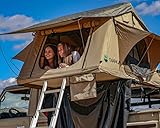
All 8 Soft Shell Rooftop Tents at a Glance in October
Every tent below is a genuine soft shell, meaning a fabric-covered fold-out body with no rigid clamshell. The table covers the full set so you can sort by the numbers that decide fitment.
| Product | Specifications | Action |
|---|---|---|
| Overland Vehicle Systems TMBK 3-Person |
|
Check Latest Price |
 OVS HD Nomadic 3 Extended OVS HD Nomadic 3 Extended |
|
Check Latest Price |
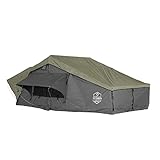 OVS HD Nomadic 2 Extended OVS HD Nomadic 2 Extended |
|
Check Latest Price |
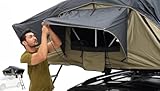 Meedo Apolle A86 M Meedo Apolle A86 M |
|
Check Latest Price |
 Roofnest Meadowlark Roofnest Meadowlark |
|
Check Latest Price |
 Meedo Apolle TNT L Meedo Apolle TNT L |
|
Check Latest Price |
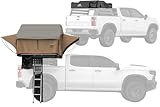 Tuff Stuff Overland Ranger 65 Tuff Stuff Overland Ranger 65 |
|
Check Latest Price |
 Tuff Stuff Elite Overland 5-Person Tuff Stuff Elite Overland 5-Person |
|
Check Latest Price |
1. Overland Vehicle Systems TMBK – Best Overall Softshell for Most Campers
Soft Shell Rooftop Tent for SUV & Truck Camping, 3-Person – Overland Vehicle Systems TMBK – Universal Fitment with Rainfly & Ladder
Weight: 108 pounds
Sleeping area: 53.5 x 92 inches
Mattress: 2.25 inches
300 mm / 2000 PU waterproofing
Pros
- Poly-cotton ripstop canvas holds up to all-night rain
- Quick five-minute deploy and pack
- Integrated skylight and 360 degree views
- Sits low enough for small vehicle racks
Cons
- Thin paperwork with errors in the instructions
- Included ladder needs extra drilled holes for a solid angle
- Mattress is thin enough to want a topper
The TMBK is the tent we kept coming back to. At 108 lb it is light enough for a mid-size SUV without feeling flimsy, and the poly-cotton ripstop canvas body paired with a 420D polyester Oxford rainfly has a spec sheet that reads like a unit built for real weather rather than a weekend demo. Owners describe it as staying dry through all-night rain, and the waterproofing technology is listed at 300 mm with a 2000 PU rating.
Setup is the part that surprised us most. We unclip the transit cover, release the compression straps and pull the ladder, and the whole shell unfolds flat on the rack in a motion rather than a sequence. Owners consistently put deploy and pack-down at about five minutes each way, which is quick enough that arriving at a campsite after dark stops being a problem.
The interior is the real argument for this one. The sleeping area measures 53.5 by 92 inches, which fits two adults comfortably or two adults and a child, and there is an integrated skylight for stargazing plus windows on multiple sides for cross-ventilation. Buyers report that the airflow from those windows and the top opening noticeably reduces the stuffiness that comes with a small enclosed space.
Construction details are better than the spec sheet leads you to expect: an aluminum-plated base, marine grade stainless steel hardware, a high-density foam mattress with a cotton cover, and a thick travel cover with straps that owners say stay secure at highway speed. Several long-term owners report years of service and good factory response on warranty issues.
What we like about the fit and the build
At 108 lb with a closed profile of 57 by 49.5 by 11.5 inches, this is one of the few tents in the group that genuinely sits low on a rack, which keeps the centre of gravity reasonable and adds less drag than a tall folded box. The universal mounting approach works with Freedom Bars for cars and SUVs, the Freedom Truck Bed Rack and Discovery racks, so you are not locked into one brand of rack.
Where owners push back
Three complaints recur and none are fatal. The documentation is thin and contains spelling mistakes, so budget real time for the first assembly. The included ladder feels flimsy and often needs extra drilled holes to hold a proper angle. The 2.25-inch mattress is thin, and most owners add a topper for trips longer than a weekend.
Two more details worth knowing. There is no insulation, so this is a three-season tent unless you add a liner, and condensation builds under the mattress when more than one person is inside. If you camp in cold shoulder seasons, treat the anti-condensation mat in our storage section as essential rather than optional.
2. Overland Vehicle Systems HD Nomadic 3 – Built for Heavy Roof Loads
Overland Vehicle Systems HD Nomadic 3 Extended Soft Shell Roof Top Tent – Dark Gray Base with Green Rain Fly & Black 1000G PVC Travel Cover – Black Aluminum Base
Weight: 165 pounds
Floor area: 6536 square inches
600D ripstop body
4-year limited warranty
Pros
- Full diamond plate aluminum base
- 6536 sq in of usable floor area
- No-drill mounting on an existing roof rack
- Travel cover and memory foam pillows included
Cons
- Heavy at 165 lb which eats payload
- Rack must have adequate weight capacity
- Premium price against entry-level softshells
The HD Nomadic 3 is the version of the same idea for people whose vehicle can take the weight. It carries a full diamond plate base in black aluminum, a 600D ripstop body and a 6536 square inch floor area, which is the second-largest sleeping platform in this group. At 165 lb it needs a rack rated for it, and the manufacturer is explicit that you should confirm rack capacity before buying.
Installation is where it earns its keep. If your vehicle already has a factory or aftermarket roof rack, there is no drilling and no modification, which saves an afternoon and avoids sealing issues. The closed package measures 48 by 64 by 9.4 inches, so it reads as a low slab on the rack rather than a tall box.
Owner feedback is positive and notably free of the complaints that plague the budget end. Buyers point to the rugged base, the roomy three-person footprint, the removable rainfly and the included 1000G PVC travel cover. The bonus memory foam pillows, mini broom and dust pan are small touches that matter more than they sound when you are pitching a tent at dusk.
The warranty is the strongest in this roundup at four years limited, and combined with the 71 percent five-star share across 93 reviews, that gives you the most documented long-term ownership story among the heavy options here. Several reviewers frame it as the confidence buy for multi-year overland use rather than a seasonal purchase.
Where the extra weight pays off
A full aluminum base and a larger floor are what you are paying the weight for. If you are camping with a partner and gear that needs to come inside with you, or you want the option of a third sleeper, the 6536 square inches changes what a night in the tent feels like. It also has a four-season rating in the listing, so cold-weather buyers have a legitimate option here.
Who should pass on it
Anyone on a payload-limited vehicle should stop here and read the roof load section first. 165 lb plus a rack, plus a second person climbing onto the roof every night, plus a mattress and bedding, is a meaningful chunk of a typical roof rating. The same goes for anyone whose rack is a light-duty cargo rail rather than a load-rated system. The instructions are clear on this point, and owners who skipped that check are the ones who regret the purchase.
One more practical note: the removable rainfly means one more piece to store and one more seam to inspect before heavy weather. That is a fair trade for a tent you can dry out overnight, but only if you actually remove it when you get home.
3. Overland Vehicle Systems HD Nomadic 2 – Best Two-Person Value
Extended Soft Shell Rooftop Tent, 2-Person – Overland Vehicle Systems HD Nomadic 2 – Grey Body & Green Rainfly
Floor area: 5922 square inches
Mattress: 3-inch high density foam
600D rip-stop poly cotton canvas
4-year warranty
Pros
- Three-inch mattress needs no added topper
- Heat-sealed seams on body and fly
- 96-inch telescoping ladder with locking strap
- Storage loft
- pockets and LED strip included
Cons
- Mounting hardware does not fit many expedition racks
- Rainfly poles can foul the cab in some positions
- Vestibule roof pools water between frame supports
The HD Nomadic 2 is the pick if two people are the plan and you want a proper mattress. At three inches of high-density foam with a quilted cotton cover and an insulated base, it is the thickest standard mattress among the tents with strong owner feedback here, and owners say it needs no additional topper, which removes both a cost and a storage problem.
The build follows the same marine grade approach as its bigger brother: 600D rip-stop poly cotton canvas body, 420D polyester Oxford rainfly, marine grade stainless steel hardware, a 1000G PVC heavy duty travel cover and 110G fade-less gauze breathable windows. Heat-sealed seams on both body and rainfly are the detail that stands out, and owners with multi-year experience report the tent holding up through serious rain storms.
Interior storage is unusually well thought out for this class. You get a storage loft, six built-in pockets, a power bank pouch, an LED light and a velcro LED strip, which for a two-person tent is enough to keep phones, headlamps and a book off the floor. The open footprint is 54 by 122 by 51 inches, and that extra length is what lets two adults sleep without lying shoulder to shoulder.
The ladder is a 96-inch tubular telescoping unit with a locking strap and quick release steel hinges, which is the right spec for a stable approach to a tent that sits higher off the ground than most softshells.
What makes this the value two-person option
Buyers describe build quality that rivals tents costing considerably more, and the review summary repeatedly praises the manufacturer for responsive support. The 4-year warranty matches the Nomadic 3. If you are buying for two and you care more about mattress quality and seam sealing than about maximum floor area, this is the one we would shortlist first.
Where the hardware bites
Two mounting issues appear repeatedly in owner feedback. The supplied cross bars and mounting hardware do not fit standard expedition-style racks, meaning you may need to source your own brackets or fabricate an adapter. The ladder mount holes may not line up, and the ladder bracket can arrive slightly bent.
There is one safety-related report worth taking seriously: a tent detaching from a bed rack because of loose hardware. Whether or not that reflects a manufacturing defect, the lesson is straightforward. Torque every bracket to the manufacturer’s specification, re-check them after the first hundred miles, and inspect before every trip. Never rely on a rack whose capacity you have not verified.
Two rainfly complaints round out the list. The fly poles can hit the cab at certain mounting positions so the fly cannot be used as designed, and the vestibule roof collects water between the frame supports and has to be lifted manually. A small amount of water can also wick along the sides and wet the mattress edges, so check the fly is fully seated before you settle in for the night.
4. Meedo Apolle A86 M – Top Rated for Two
Meedo Apolle A86 M, Soft Shell Rooftop Tent, Fits 2 People, Made with Waterproof Material and a Rainfly-Fold Design, Clamshell Army Green Roof top Tent for Overlanding Hunting, Ladder Included
Weight: 125 pounds
Floor area: 4977 square inches
3000MM waterproof Oxford fabric
4.5-inch foam mattress
Pros
- 4.5-inch mattress sleeps two adults well
- Built-in moisture-proof and condensation pads
- Pre-assembled and ready out of the box
- Level 6-7 wind resistance
Cons
- Roughly 83 lb of added load hurts fuel economy on small vehicles
- Traps heat while driving and cools slowly
- Needs two to three people and upgraded bars to install
The Apolle A86 M is the most interesting spec sheet per pound in this group. At 125 lb it is lighter than the other three-person options here, and it pairs a 4.5-inch high-density foam mattress with what the manufacturer calls double moisture control: a built-in marine moisture-proof pad and a separate condensation isolation pad. That second layer is the feature we would highlight to anyone worried about damp mattresses.
Waterproofing is specified at 3000MM on Oxford fabric with a 4000 coating, wind resistance is listed at level 6 to 7, and sun protection is claimed at 99.99 percent. For a two-person tent with a 4977 square inch floor measuring 90.5 by 55 inches, those are competitive numbers against models with three times the owner feedback.
Setup is the easiest in this roundup for a first-time buyer. The tent arrives pre-assembled, the bi-fold style body deploys with the included 2.3 metre telescoping aluminium ladder, and owners put it at a matter of minutes in both directions. The package also includes an LED light, adapter cable, rail end caps, 16 luggage rack fixing brackets, tools and shoe bags, which is unusually complete out of the box.
Owners report it is roomier than expected for a two-person tent, with two large side doors, front and back windows and a top sunroof window. That ventilation count matters more than it sounds, because airflow is the cheapest way to cut condensation. The 4.5-inch mattress is reported as comfortable for two adults, and the whole thing has held up against wind and rain in owner reports.
Why we like it despite the thin review base
Sixteen reviews is not a long-term record, and we will not pretend otherwise. What those reviews do show is consistency: sturdy fabric, smooth zippers, quick deployment, more space than expected, and a mattress that works. One owner fits it to a Subaru Outback and a Jeep Gladiator with rack upgrades, which is a useful data point on fitment.
The 16 mounting brackets in the box are the reason we think it installs cleanly, and the aircraft-grade aluminium alloy frame is a better base than the folding steel you get at the bottom of the category.
Where the compromises land
Weight is the honest drawback. Owners call out roughly 83 lb of added load and a measurable hit to fuel economy on smaller vehicles, and they note it needs upgraded roof bars. The tent also traps heat while driving and takes a while to cool down after you open it, which is a softshell characteristic rather than a defect.
Two smaller issues. The mattress still draws complaints about comfort, and an owner mentions one internal pocket found to be incompletely sewn. There is also a single sharply negative review about third-party shipping logistics and brand-level customer service, and the warranty is one year with accessory replacement, which is the shortest meaningful cover in this group. If you want factory support in your country, verify that before ordering.
5. Roofnest Meadowlark – Lightest Pick for Small Cars
Roofnest Meadowlark Soft Shell Roof Top Tent for Car Camping and Overlanding, Lightweight, Waterproof, 2 Person Tent, Easy Assembly, Universal Mounting Brackets Included
Weight: 90 pounds
Floor: 80 x 43 inches
Mattress: 2.5-inch foam
2-year warranty
Pros
- 90 lb load suits compact SUVs and cars
- Sub-one-minute fold-out setup
- All-in-one package with mattress
- ladder and hardware
- Two-year warranty on parts and workmanship
Cons
- Premium asking for a two-person softshell
- 2.5-inch mattress is thinner than most rivals here
- Setup has a steeper learning curve than the claim suggests
At 90 lb, the Meadowlark carries the lightest verified load in this group, and that number is the whole pitch. It is a clamshell softshell with a poly-cotton base, a 47 by 44 by 12 inch closed profile, and a 2.5-inch foam mattress on an 80 by 43 inch floor. For a small crossover, a wagon or a car with a properly rated rack, that is the difference between a rooftop tent being plausible and being a problem.
The setup claim is sub-one-minute fold-out, and owner reaction is mostly positive about speed, with one reviewer noting a steeper learning curve than the number implies. We would call it fast rather than instant, but the direction of travel is right: a tent you can deploy after dark without a headlamp and a spare pair of hands is a real quality-of-life gain.
Weather protection is specified as a fully seam-taped waterproof body and rain cover rated for four seasons, with a poly-cotton blend fly. The universal mounting brackets are included and are listed as fitting a range of racks, and the package comes with a 7.5 foot ladder, tent cover, two detachable interior pockets and the mattress, so nothing else needs buying to get a first night under cover.
The two-year warranty on parts, materials and workmanship is a genuine differentiator in this price band, and it is backed by EU spare part availability listed at two years, which reduces the risk of an unusable tent after a zipper failure.
What the low weight actually unlocks
Owners consistently point at the compact two-person footprint and the fast setup as the reasons to buy, and reviewers describe the interior as making good use of a small space. If you are pairing a tent with a factory roof rail rather than a full rack, the 90 lb figure leaves far more of your dynamic rating available for a second occupant climbing up, bedding and accessories than any other pick here.
Where it falls short
The asking level is high for a two-person softshell, and that is the first thing you will notice when comparing it to the heavier tents on this list. The 2.5-inch foam mattress is thinner than the three-inch pad on the HD Nomadic 2 and considerably thinner than the 4.5-inch pads on the Meedo models, so budget for a topper if you are sensitive to pressure points.
Only twelve reviews means limited long-term evidence, and the smaller floor means it is genuinely a two-person tent. Sleeping bags, a third person or a large dog on that floor is a squeeze. If you want more room and do not need the low weight, the value moves decisively toward the heavier models.
6. Meedo Apolle TNT L – Best Vented Three-Person Tent
Meedo Designs Apolle TNT L, Soft Shell Rooftop Tent, Fits 3 People, Made with Waterproof Material and Bi-Fold Design, Clamshell Army Green Roof top Tent for SUV, Truck, Pickup,Trailer, Ladder Included
Weight: 134.5 pounds
4000MM waterproof Oxford fabric
Four upper side vents
4.5-inch high-density foam mattress
Pros
- Four upper side vents for genuine cross-ventilation
- Highest waterproof rating in this group at 4000MM
- Under-one-minute clamshell deployment
- Ceiling LED light strip and dual-zip openings
Cons
- A single review
- so no long-term owner record
- 134.5 lb is a heavy load for many vehicles
- One-year warranty is short beside two and four year rivals
The Apolle TNT L is the three-person version of the same design language as the A86 M, scaled up and reconfigured. It uses the same Oxford fabric with a 4000 coating, but the waterproof rating rises to 4000MM, which is the highest figure published by any tent in this roundup. Wind resistance is level 6 to 7, sun protection 99.99 percent, and it is rated for four-season use including snow resistance.
Ventilation is the reason we picked it for this badge. There are four upper side vents plus two side doors, two front and back windows and a skylight, and every opening is dual-zip. Owners specifically call out the four upper vents as providing excellent airflow, which is the cheapest defence against the condensation problem that softshells are prone to.
Deployment is a bi-fold clamshell that locks in under a minute, with an equally quick pack-down, and the 4.5-inch high-density foam mattress is included. The closed package is 59.06 by 43.31 by 10.61 inches and the open tent is 86.61 by 48.43 by 51.18 inches, with a listed floor width of 59.06 inches.
What the specification set promises
The included kit is thorough: a 2.3 metre aluminium ladder, LED light strip with a velcro ceiling mount, adapter cable, rail end caps, poles, acorn nuts, screws, rail sliders, 16 luggage rack brackets, pole supports, tools and shoe bags. The mounting hardware is described as vehicle-agnostic for standard roof racks, with the Toyota Tacoma, Jeep Wrangler and Subaru Outback named as reference vehicles.
Why we would not put it on your rack yet
One review. That is the entire owner record, and a five-star rating on a single review is not evidence of durability. We have included it because the specification set is genuinely competitive and because you should see it in the comparison, but we would treat it as a model to watch rather than a model to commit to for multi-year overland use.
At 134.5 lb it also carries a meaningful payload cost, and the one-year warranty is the shortest of the three covers in this roundup that offer any at all. If the ventilation design and 4000MM rating appeal to you, the safer path is to confirm the brand’s support and parts availability in your country first. If you want those features with a documented owner history, the Overland Vehicle Systems models offer four-year terms and far more reviews.
7. Tuff Stuff Overland Ranger – Wide Platform for Two or Three
Tuff Stuff Overland Ranger TS-RTT-RAN-65 Roof Top Tent; 3 Person; 65″
Weight: 172 pounds
Open: 65 x 96 x 52 inches
Mattress: 65 x 92.5 x 2.75 inches
280G poly-cotton rip-stop body
Pros
- Large 65 x 96 inch sleeping platform
- Three screened window openings with rods
- Brackets included fit cross bars up to 3.25 inches
- Aluminum and fiberglass tent floor
Cons
- 172 lb is a serious payload load
- Only a 30-day manufacturer warranty
- Rainfly is water resistant rather than fully waterproof
The Overland Ranger is a large-format softshell with a 65 by 96 inch platform, which works out to a sleeping area of 65 by 92.5 inches on a 2.75-inch mattress. That is a genuinely wide bed, and it is why the tent is rated for two to three people rather than a strict capacity number. The body is 280G poly and cotton rip-stop with a polyurethane coating, and the rainfly is 420D polyester Oxford with a PU coating.
Ventilation is handled by three window openings with mesh screens and window rods, which is fewer than the Meedo TNT L but more than most two-person models. The floor is an aluminum and fiberglass construction, and the mounting hardware and brackets are included and listed as fitting cross bars up to 3.25 inches wide, which covers a wide range of common racks.
The open dimensions are 65 by 96 by 52 inches. That height matters, because it means you can sit upright inside, and the extra width is what separates this from a two-person model when you are packing for two nights without unpacking the vehicle.
What the platform size changes
A platform this size is not just about adding a third sleeper. It is about living inside the tent during bad weather, stowing gear out of the cabin, and having room for a dog. Owners describe the space as roomy for two to three adults, and the mesh-screened windows give you ventilation with bug protection rather than open vents.
Where the risk sits
Weight is the first issue. At 172 lb this is one of the heavier tents we evaluated, and it needs a load-rated rack and enough of your vehicle’s dynamic roof rating left for occupants and gear. Check the numbers before anything else.
The rainfly is described as water resistant rather than fully waterproof, and the listing notes water resistance technology of a polyurethane coating on a 420D polyester Oxford fly. In sustained rain that distinction matters, so treat this as a three-season-to-four-season tent for dry climates and protected campsites rather than monsoon country. The warranty is 30 days, which is the shortest in this group by a wide margin and leaves essentially no cover for anything discovered after the first month. The listing also flags inconsistency between the listed item weight and the fabric specifications, so verify the fabric weight with the manufacturer if it is a deciding factor.
8. Tuff Stuff Elite Overland with Annex – Premium Pick
Tuff Stuff Elite Overland Roof Top Tent & Annex Room, 5 Person
Capacity: 5 people
Floor area: 7512 square inches
Annex: 132 x 79 x 52 inches
Weight: 194 pounds
Pros
- Attached annex room creates a second living space
- 7512 sq in floor area plus a separate room
- 1000D PVC waterproof floor with YKK zippers
- Insulated welded aluminum frame and taped seams
Cons
- 194 lb and a large footprint strain payload and garage clearance
- Needs 76-78 inch mounting height for ladder and annex
- Installation takes one to two hours with two people
The Tuff Stuff Elite is the only tent in this roundup that turns into two rooms. The main tent measures 79 by 96 by 52 inches with a 7512 square inch floor area, and an attached annex room extends the footprint to 132 by 79 by 52 inches. Rated for five people, it is the option for a family or a group that wants gear, chairs and wet boots out of the sleeping space.
The construction is the most elaborate here. A welded two-inch aluminium frame with aluminium sheets on top and bottom, insulation between the joists to retain warm air, a 280G cotton and poly rip-stop body with polyurethane-impregnated canvas, taped seams throughout, a 1000D PVC waterproof floor with heavy-duty YKK zippers, one-inch diameter aluminium poles, and no-see-um mosquito mesh inner and outer covers for cold and wet weather. The mattress is 2.75 inches thick.
All mounting hardware, tools and the ground spikes for the annex are included, and the annex zips on after the tent is installed. The closed package measures 79 by 48 by 16 inches, which is tall enough to matter in a garage.
What the annex actually buys you
An annex changes the trip rather than the night. It gives you a sheltered area for a kitchen, a wet zone, a dog or a place to sit when the weather turns, while the main room stays a proper bed. Insulated frame joists and the dual mesh covers also make it the most credible cold-weather option among the eight, since it is designed to hold warmth rather than merely resist rain.
Where the requirements bite
There are three hard constraints and you should clear all of them before ordering. At 194 lb this is the largest load we evaluated, so your vehicle’s dynamic roof rating has to comfortably clear the tent, the rack, the mattress, two people and their gear. The manufacturer specifies an ideal mounting height of 76 to 78 inches above ground, which means a truck bed rack or a lifted vehicle rather than a low crossover. And installation is listed at one to two hours with two people.
There is also the evidence question. Like the two preceding models, the Elite is supported by a single five-star review, so the specification set is the argument rather than owner history, and no warranty term is stated. If a two-room layout is what your group needs and you can meet the mounting height and weight requirements, this is the only model in the roundup that delivers it. Otherwise the three-person platforms are a more realistic starting point.
How to Choose a Soft Shell Rooftop Tent
Start with your vehicle and work outwards, not the other way around. Almost every disappointing rooftop tent purchase we can trace back to owners starts with a brand wish list and ends with a roof load problem, and the cheapest fix is to do the fitment math before you fall in love with a floor plan.
Weight class is the first filter. The eight tents here span 90 lb to 194 lb, and that 104 lb spread changes what vehicle can carry one. As a working framework, treat anything under 100 lb as friendly to compact crossovers and cars with load-rated rails, 100 to 140 lb as standard SUV territory, and anything above 140 lb as a truck, a heavy-duty SUV or a vehicle with a serious rack. These are organising bands, not engineering limits, and your own vehicle’s rating overrides them every time.
Capacity is about floor area, not the number on the box. Listed occupancy tends to be optimistic by design. The more useful figures are floor length and width: the HD Nomadic 2 gives you a 54 by 122 inch open footprint for two, the Meadowlark gives you 80 by 43 inches for two, and the Overland Ranger gives you 65 by 92.5 inches for two to three. Measure your sleeping bags and your partner’s shoulder width against those numbers, and add roughly 4 inches of length if you want to sit up at night.
Mattress thickness is the cheapest upgrade you can make before you buy. Owners across this group repeatedly mention adding a topper, which tells you the included pads are the weak point. The three-inch high-density foam on the HD Nomadic 2 and the 4.5-inch pads on both Meedo models need no topper according to their owners. The 2.25-inch pad on the TMBK and the 2.5-inch pad on the Meadowlark do.
Fabric denier tells you how long the tent lasts. Denier measures the thickness of the yarn, and higher numbers mean a heavier, more abrasion-resistant fabric. In this group the range runs from 280G poly and cotton rip-stop on the two Tuff Stuff models, through poly-cotton ripstop on the TMBK, up to 600D ripstop on the HD Nomadic 3 and 420D and 4000MM Oxford on the Meedo tents. A second number matters just as much: the HD Nomadic 2 and the Meedo tents use heat-sealed or heavily coated seams, which is where leaks actually start, while the Tuff Stuff Overland Ranger’s fly is water resistant rather than fully waterproof.
Setup speed changes how often you will use it. A tent you can deploy in five minutes gets used on weeknight trips. A tent that takes an hour gets left in the garage. The TMBK and the Meedo models are the fast end of this roundup, the Roofnest Meadowlark is the fastest claimed, and the Tuff Stuff Elite is the opposite extreme at one to two hours of installation before you even start.
Softshell or hardshell. A softshell trades aerodynamic smoothness and lifespan for price, weight and interior space. If your priority is fuel economy, minimal wind noise at highway speed and a tent that will still work in ten years, look at a hardshell rooftop tent instead. If your priority is floor area per pound, a repairable fabric body and a lower entry cost, a softshell is the right call. Forum consensus is consistent on this point, and owners generally report that hardshells win on durability and weather protection while softshells win on space and cost.
Warranty and support are the real quality signal. Warranty terms in this roundup run from 30 days on the Tuff Stuff Overland Ranger, to one year on both Meedo models, to two years on the Roofnest Meadowlark, to four years on both extended Overland Vehicle Systems models. Where a brand has limited local presence, a warranty you cannot claim is not a warranty, so confirm parts and service availability in your country first.
And know when to skip a rooftop tent entirely. If you camp fewer than a handful of times a year, drive a small car on tight roads, or already own a good three-season ground tent, a rooftop tent adds cost, weight and a permanent aerodynamic penalty for little gain. Cheap unbranded softshells get described in forum discussions as a false economy, workable for a few weekend trips but not for regular use. Our best value pick, the TMBK, exists precisely because it avoids that trap.
Roof Load Limits: Check Your Vehicle Before You Buy
A rooftop tent does not sit on your roof. It sits on a rack, and that rack sits on a roof, and the whole assembly counts against a limit that is usually lower than you expect. The single most useful thing you can do before choosing a tent is find that number.
Manufacturers publish two ratings and the difference matters. The static rating is the load the roof structure can carry when the vehicle is parked. The dynamic rating is the lower number that applies while you are driving, when cornering and braking load the rack in ways a parked car never experiences. The dynamic figure is the one that governs whether a rooftop tent is a safe idea, and it is frequently well below the static one.
Here is the check, in order. First, open the driver’s door and look at the placard on the door jamb or the sticker in the owner’s manual, and find the total roof load including cargo, roof box and rack. Some vehicles list separate static and dynamic figures, and if they do, use the dynamic one. Second, find the weight rating of your rack, not your roof, because a factory rail on a car is often not load-rated for a tent at all. Third, add up everything that will be up there: the tent at its published weight, the rack, the mattress, a topper, bedding, and the ladder.
Fourth, add the dynamic occupants, and this is the step people forget. A person climbing onto the roof and kneeling to get in puts well over 150 lb of concentrated, moving load onto the rack for a few seconds every night. Two people doing that repeatedly is a real test of both the rack clamps and the roof structure. Fifth, leave headroom. If your arithmetic comes within about 20 percent of the dynamic rating, you are at the edge rather than inside it, and crossbars, a roof box or a second passenger’s gear will push you over.
Accessory bloat is how people exceed limits without noticing. Awnings, annexes, gear, solar panels, recovery boards and roof boxes all count, and they are usually added after the tent. Decide the total before the tent, not after. The roof load limits that appear in most owner manuals apply to the whole assembly, and a failure there is a structural problem rather than a warranty claim.
One more practical note on fitment. Fiberglass camper shells and truck toppers are not the same as load-rated racks, and the question of whether a camper shell can carry a rooftop tent comes down to whether the shell’s mounting structure and its published rating support one. Ask the shell manufacturer, not the tent manufacturer, and get the answer in writing before drilling anything.
If you are still working through vehicle options, our picks for rooftop tents for two people and rooftop tents for families cover the two most common sleeping configurations in more depth.
Condensation, Mold and Storage Between Trips
Condensation is the softshell’s real weakness and the reason the best hardshell advocates exist. A fabric body against a mattress traps moisture from breath, from wet gear and from temperature swings, and a softshell mounted on the vehicle collects that moisture for as long as it stays up there. Folded and damp, the cover and the canvas will develop mildew within a season, which is the single most common long-term failure forum owners report.
The fix is an anti-condensation mat. It is a thin insulating layer between the mattress and the tent floor that breaks the temperature differential that creates moisture in the first place. The Meedo Apolle A86 M builds in a marine moisture-proof pad and a separate condensation isolation pad, which is the most complete built-in solution in this roundup. On the other models, treat the mat as the first accessory you buy.
Ventilation is the other half. The tents with the most openings manage it best, and the Meedo Apolle TNT L with four upper side vents, two side doors, front and back windows and a skylight is the most generously vented model here. On any tent, opening the window and fly panels before you climb in, and leaving the fly slightly off in dry conditions, shortens wet-down time considerably.
Between trips, the protocol matters more than any product choice. Take the tent off the vehicle if you can. If you cannot, at minimum unzip the transit cover so the body breathes, and never leave bedding inside a folded tent. Hang the body and fly separately if space allows, and let them dry completely before repacking. Store the tent loose rather than compressed for long periods, and keep it in a dry, ventilated space rather than a sealed plastic tote, which traps whatever moisture is left.
Finally, treat the fabric. A softshell body that has weathered a season loses water-shedding performance, and a polyurethane-impregnated or coated fabric benefits from a re-treatment every year or two depending on use. Check the care instructions for your specific model, and use a marine-grade spray-on protector only where the manufacturer permits it. Fabric that has been re-treated generously also stays quieter in wind, which matters on a motorway camp.
Frequently Asked Questions
Are soft shell roof top tents any good?
Yes, when your vehicle’s roof load allows one and you value interior space over aerodynamic drag. Softshells are lighter and cheaper than hardshells, open into more floor area, and repair more easily. In this roundup they range from 90 lb to 194 lb, with published ratings from 4.3 to 5 stars across owner reviews. Their real weakness is condensation and long-term fabric durability, which is manageable with an anti-condensation mat and a proper dry-out routine between trips.
What is the maximum weight a rooftop tent can hold?
A rooftop tent can hold whatever your vehicle and rack are rated for, not whatever the tent itself weighs. Find the dynamic roof load rating on the driver’s door jamb placard or in the owner’s manual, since the driving figure is lower than the parked static figure. Add the tent weight, the rack, the mattress, bedding and the dynamic load of people climbing up. If the total is within about 20 percent of the dynamic rating, choose a lighter tent.
Are roof top tents too heavy?
It depends entirely on the vehicle and the tent. The eight models reviewed here span 90 lb to 194 lb, and that 104 lb spread decides what fits where. Treat under 100 lb as suitable for compact crossovers and cars with load-rated rails, 100 to 140 lb as standard SUV territory, and above 140 lb as a truck or heavy-duty vehicle with a serious rack. Your vehicle’s dynamic rating always overrides these bands.
Can I put a rooftop tent on a factory roof rack?
Sometimes, but only if the rack is load-rated for the combined weight of the tent, the rack and the people climbing onto it. Many factory roof rails on small cars and crossovers are cargo rails rather than load-rated racks, and mounting a rooftop tent to one is a structural risk rather than a convenience. Check the rack’s published weight capacity, check your vehicle’s dynamic roof rating, and use the universal mounting hardware that ships with most of these tents.
Can a camper shell hold a roof top tent?
Only if the camper shell’s mounting structure and its published weight rating support one. A fiberglass shell or truck topper is not automatically a load-rated rack, and the shell’s own weight counts against your vehicle’s dynamic roof limit alongside the tent. Ask the shell manufacturer for a written rating before drilling or clamping anything to it, and confirm the combined total stays within your vehicle’s dynamic roof load figure.
Are rooftop tents worth it?
They are worth it for people who camp regularly, drive to sites that are hard to pitch on, or want to sleep above the road rather than in a ground tent. They are not worth it for occasional weekend campers on small vehicles, who will carry the cost, the weight and a permanent aerodynamic penalty for little gain. Forum consensus also treats cheap unbranded softshells as a false economy, viable for a few trips a year but not for regular overlanding use.
Our Final Verdict on the Best Soft Shell Rooftop Tents
The best soft shell rooftop tents for camping in 2026 come down to your roof rating and your sleeping count, and the eight here cover that range properly. Our overall pick, the Overland Vehicle Systems TMBK, pairs a 108 lb load with a 53.5 by 92 inch sleeping area, a five-minute deploy and 151 reviews averaging 4.4 stars, and it is the tent we would put on our own rack.
Buy the HD Nomadic 3 if your vehicle can take 165 lb and you want an aluminum base and a four-year warranty. Buy the HD Nomadic 2 for two people who care about a three-inch mattress and heat-sealed seams. Buy the Meedo Apolle A86 M if you want the thickest mattress and built-in condensation control at the lower end, the Roofnest Meadowlark if 90 lb is your ceiling, and the Tuff Stuff Elite only if a group needs a genuine second room.
Before any of them, do the roof load arithmetic. Then check the price and current details for your vehicle with the button on each section.